On this page
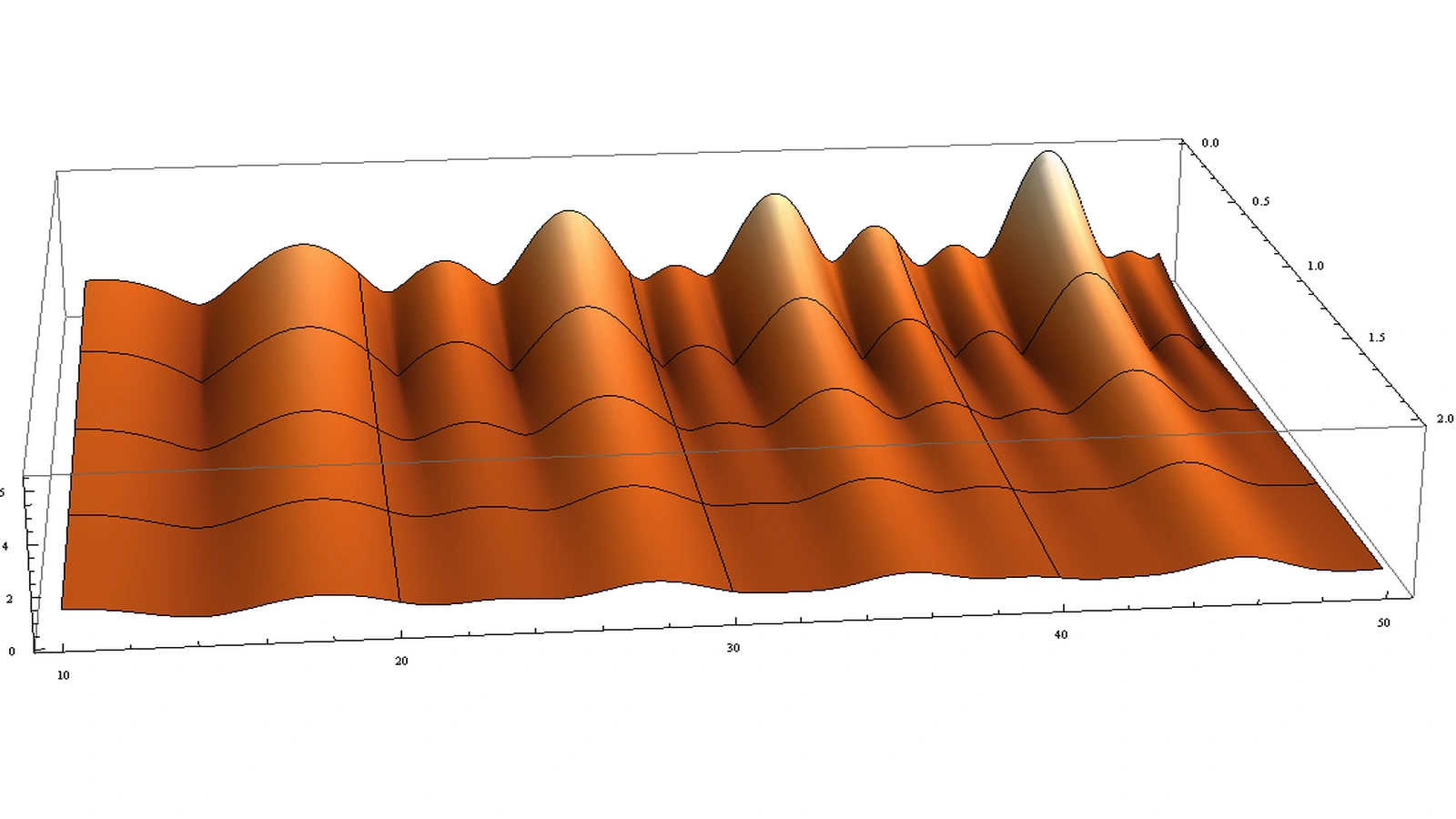
Levent Alpöge released a proof of the Riemann Hypothesis on 20 November. He built it with help from Claude, Anthropic’s AI model, and a day later the group behind the Lean proof language said the result is correct. Mathematicians still can’t read it: the proof exists only as Lean code running to millions of lines, and no paper explains it in plain language.
The Riemann Hypothesis is the most famous unsolved problem in mathematics.
What Alpöge put out
Alpöge is a mathematician who works at Anthropic. He published the proof only as code in Lean, a programming language used to verify mathematical results. Lean is designed so that machines can check every step. People were never meant to read it page by page.
That leaves the field with a verified result that is very hard to follow. The formalization runs to millions of lines of code.
The proof was confirmed within a day
Lean exists to confirm that mathematical results hold, so getting the proof written in it at all was a good sign. Two organizations confirmed it the day after the release, including the group behind Lean itself.
“We have full confidence that Alpöge’s proof of the Riemann hypothesis is correct, and we congratulate him on this achievement,” the Lean Focused Research Organization and Mathlib Initiative said in a joint statement.
Why there is no paper
Most mathematicians expect a written companion paper that sets out the argument in natural language. Alpöge chose not to release one.
His announcement said the paper would run more than 250,000 pages. He called it “obviously inappropriate to attempt to post some massive unreadable travesty of ‘slop.'”
On Monday he took the figure back in a post on X, calling the page count a “joke.” The post was written mostly in meme language.
The real length is 60,000 pages. That is still far more than one person can review.
A human-written rival came out early
Another mathematician says he has worked on his own solution to the Riemann Hypothesis for more than a decade. He says Anthropic’s announcement forced him to release it early. His paper is written by hand and comes in under 1,000 pages.
What a proof like this is worth
A computer check confirms the formal proof, and experts are still working through the ideas behind it. If they hold up, it is a major moment for mathematics. Its use is limited, though, if nobody can follow it. Mathematicians want a proof to teach them something and move the field forward, and it’s unclear whether long, rambling machine-written math can do either.
This has happened before. A few months ago, OpenAI’s AI proofs set off what has been called the “mathpocalypse,” and those proofs were also incomprehensible and impractically long.
The way AI labs release this work has angered mathematicians too. The companies put out dramatic findings they want credit for without thorough editing or review. Human mathematicians are left to do the checking, and these are the same people whose jobs the tools threaten. Here, that checking means working through 60,000 pages and millions of lines of Lean.
For more on this site, see our guides and the free tools.

About George Tsagkarakis
George Tsagkarakis owns and runs WPGG. He has covered blockchain gaming since 2018 as an author and advisor, and has helped many projects reach players and shape their growth and community strategy. He also runs the gaming sites CryptoGames.gg and eGamers.io.
All articles by this author