On this page
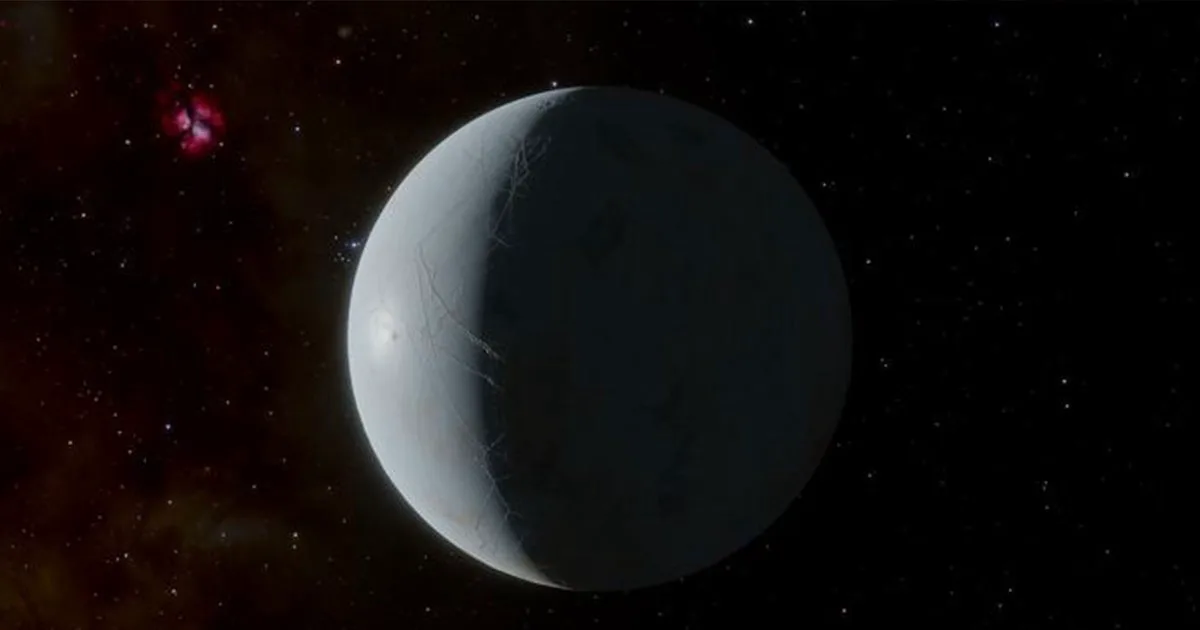
An international research team says a planet with 1.5 to two times Earth’s mass, which it has named Planet X2, may be what’s bending the orbits of a group of icy bodies past Neptune. No one has detected it, and the team admits its model and the real observations still disagree in places. Until a telescope checks, it stays a hypothesis.
Planet X2 would be much smaller than Planet Nine, the hypothetical world that has drawn most of the attention. A 2021 estimate put Planet Nine at about six Earth masses, and it has never been observed either.
The puzzle past Neptune
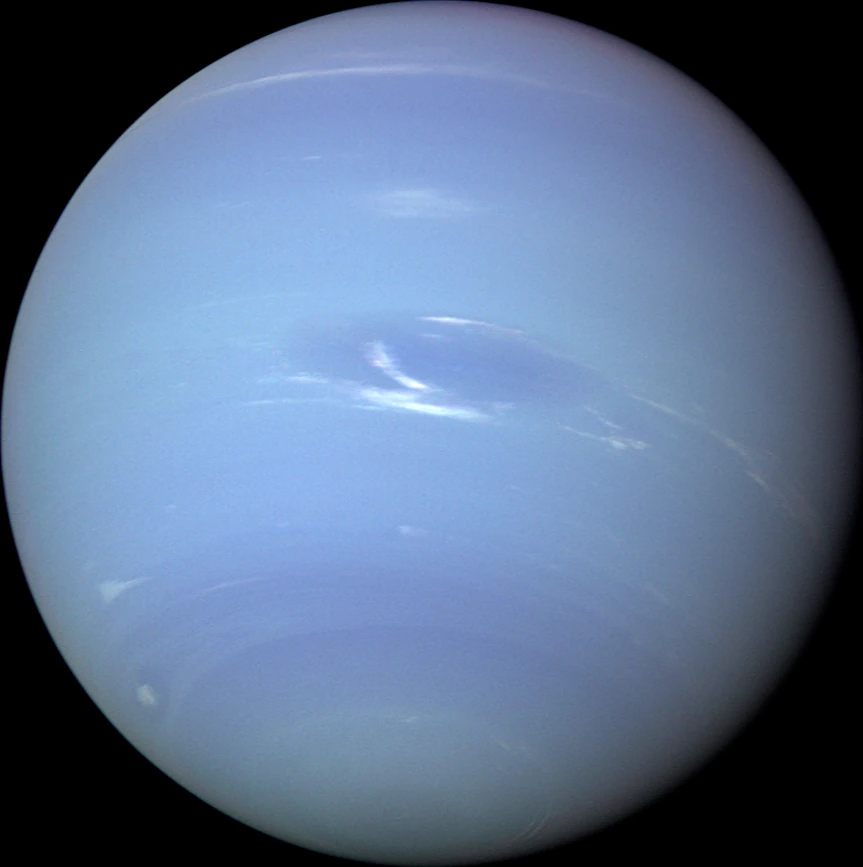
Neptune is about 30 astronomical units out, meaning 30 times as far from the Sun as Earth. For decades, researchers haven’t been able to fully explain the small frozen bodies that orbit beyond it. A lot of them are tipped steeply away from the flat plane that most of the solar system shares. Others trace long, drawn-out loops around the Sun.
Orbits like these suggest an invisible mass is tugging on them. Following that logic, some scientists proposed a planet many times heavier than Earth somewhere in the far solar system, known as Planet Nine or Planet X. The proposal has drawn controversy. It has never turned up in a telescope, and finding it would be very difficult: it would be enormously far away, where the Sun’s light barely reaches.
What the new model does
Patryk Sofia Lykawka of Kindai University in Japan led the study, with coauthors including Jonti Horner of the University of Southern Queensland. It appears in Monthly Notices of the Royal Astronomical Society. To see whether one distant planet could explain how the trans-Neptunian objects move, the researchers ran simulations covering billions of years of solar system history.
In those runs, Planet X2 was able to pull some of the icy objects free of Neptune’s gravity and tip their orbits steeply.
Lykawka has acknowledged that differences between the model and the observations still need investigating.
The planet’s own orbit would be unusual too. The model places it on a stretched path that never comes closer to the Sun than about 200 astronomical units, with an average distance of roughly 350 to 500. A world not much heavier than Earth would then circle hundreds of times farther out than we do.
Planet Nine, Planet X2, both or neither
The two ideas can coexist: one, both or neither of these worlds could be out there. Horner has also cautioned that a good model does not guarantee such a planet exists, and another explanation without an unseen planet could emerge.
How the idea gets tested
The test is expected to come from the Vera C. Rubin Observatory in Chile. Its ten year survey of the sky should find many more distant icy objects, and their orbits can be compared with what the model predicts. The survey might even spot the planet directly.
For lighter reading, see our guides and the upcoming games calendar.

About George Tsagkarakis
George Tsagkarakis owns and runs WPGG. He has covered blockchain gaming since 2018 as an author and advisor, and has helped many projects reach players and shape their growth and community strategy. He also runs the gaming sites CryptoGames.gg and eGamers.io.
All articles by this author