Crop farm basics: water, light and the first field that feeds you
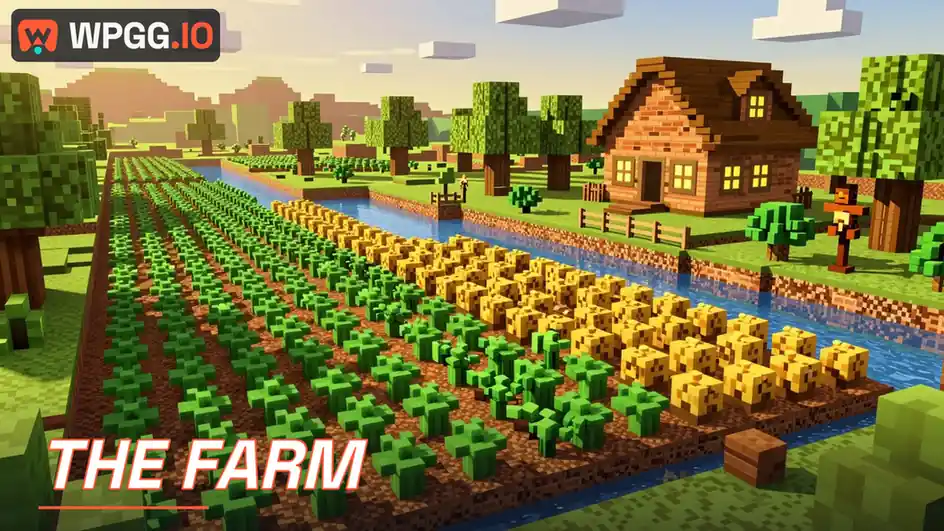
Food is the first logistics problem of every Minecraft world, and crops solve it permanently once you know three rules: farmland, water range and light.
The three rules
- Farmland: crops grow on tilled dirt. A hoe on dirt or grass makes farmland; jumping on it turns it back, so design your paths with that in mind.
- Water range: a water block hydrates farmland up to four blocks away in every direction. A single water block sits at the centre of a nine by nine field, which is the classic layout for a reason.
- Light: crops need light to grow, which means farm rooms need torches after dark, and outdoor fields grow in daylight on their own.
With those rules, wheat, carrots, potatoes and beetroot grow on their own schedule; bone meal from a skeleton-free compost line speeds them when you are impatient. Wheat seeds come from breaking grass, which makes bread the first crop almost everyone grows.
Layouts that work
Start with the nine by nine: tilled ring around a centre water block, fence or path edge so you never trample it. Add a second ring of torches for night growth. When animals join the base, a wheat field doubles as their feed line, and a farmer villager will buy the surplus for emeralds. For automated harvesting, the piston and water tricks on the redstone page do the work, but manual harvesting of a nine by nine takes under a minute.
One field feeds a player indefinitely. The second field is for trading and animal feed; the third is usually ambition, and ambition is fine.
FAQ
Does rain water crops?
No. Rain is decorative for farms; hydration comes only from water blocks in range.
Do crops grow underground?
Yes, with farmland, water in range and artificial light. Underground farms are standard in long-run bases.
What feeds animals?
Wheat for cows and sheep, seeds for chickens, carrots for pigs. The same field line supplies all of them.