GTA 6 Store Safes: Entry Methods and Costs
How GTA 6 store safes open: clerk interrogation, written notes found with Focus Mode, sticky bombs, and the lock picking that some safes allow.
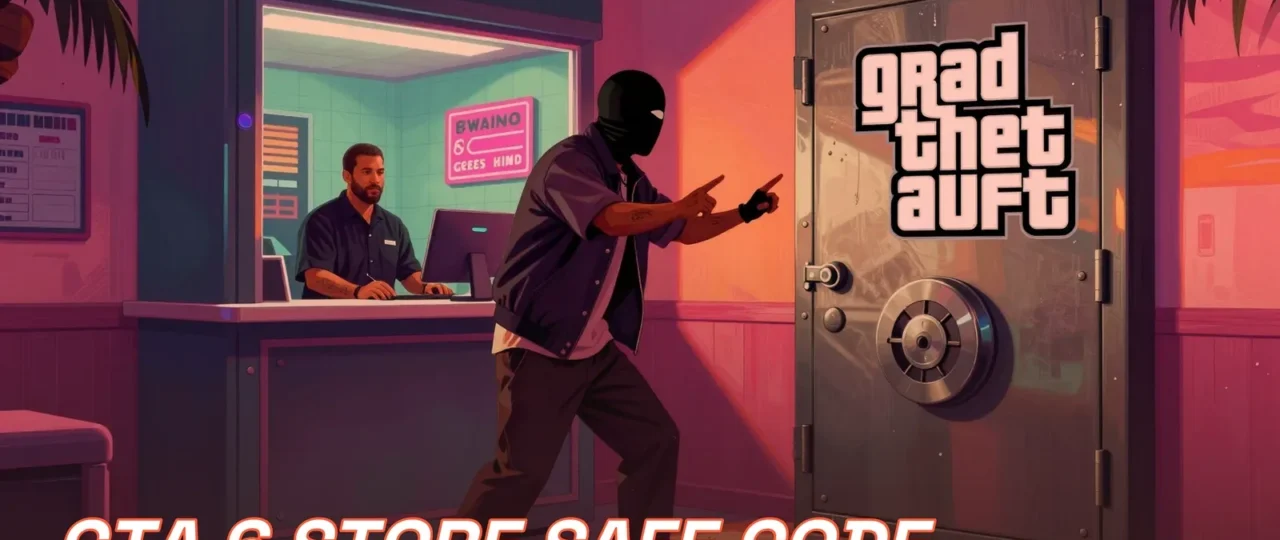
GTA 6 store safes open through four documented methods, in ascending order of cost: the Safe Code prompt from a threatened clerk, a written note found with Focus Mode, lock picking or forcing where the safe allows it, and a sticky bomb, which always works and always raises your criminal profile. Codes are generated per robbery, so the methods repeat on every job rather than solving a safe once.
The map check
Store entries on the map display three facts relevant to safes: whether the business keeps one, its security level, and the approximate value of its goods. This information is the planning layer of the system, because the safe holds the valuable portion of a store’s take and the security level describes the resistance the job meets. GTA 6 robbing stores can you rob any shop documents which businesses fall into the robable set in the first place.
Method one: the Safe Code prompt
With the safe or keypad located inside, threatening the employee behind the counter produces a prompt that requests the safe code. This is the primary method and the one the game’s loop assumes. Its documented limitation is refusal: some employees do not hand over the code, and the documented response is to approach a different employee or to widen the search of the premises.
Method two: written codes
Safe codes also exist as physical documents inside the store. Notes, sticky notes and papers appear in back offices, storage rooms and staff areas, and Focus Mode reveals these clues. The search extends to personnel: guards may carry the combination, which converts an already neutralized guard into a code source. The written route yields the same code the clerk would provide without depending on any employee’s cooperation.
Method three: the sticky bomb, and its cost
A sticky bomb opens the safe without a code and raises the criminal profile as its price. Guides distinguish it from other explosives on the grounds of contents: other explosives can damage the valuables inside the safe, which converts a successful entry into destroyed loot. Sticky bombs therefore occupy the role of the guaranteed but profile-costed option, positioned after the two quiet methods have been exhausted. Lock picking and forcing apply to some safes as additional no-code entries.
The cost structure of the four methods deserves its own summary line. The prompt and the paper trail produce a code without touching the criminal profile, and picking or forcing where available joins them on the zero-cost tier. The sticky bomb alone carries a profile increase, and it trades that cost for certainty, since no safe refuses it. A rational sequence therefore spends the zero-cost methods first and treats the bomb as the documented fallback, which is also the order the game’s own prompts suggest by placing the Safe Code interaction at the center of the robbery loop.
The repetition problem
Because codes are random per robbery, and because a repeat job at the same business can produce a different code than the last one, none of these methods produces reusable knowledge. The reusable knowledge is procedural: which stores keep safes, how heavy their security runs, and the order of methods that opens them at the lowest profile cost. That procedure, map check, clerk, paper trail, bomb, is the stable answer the system rewards on every job. It also scales with ambition: the same sequence covers a low-security convenience store and a high-value shop, with the map’s security reading indicating in advance how much of the sequence a given job is likely to need. The sequence is also fail-safe in one direction: stopping early costs time, while skipping ahead to the bomb costs profile, so the incentives all point toward patience.
Frequently asked questions
What is the primary way to open a GTA 6 store safe?
Threatening the clerk and using the Safe Code prompt. The limitation is that some employees refuse, in which case another employee or a search follows.
Where are written safe codes found?
On notes, sticky notes and papers in back offices, storage rooms and staff areas. Guards may also carry the combination.
What does a sticky bomb cost?
It raises your criminal profile. Sticky bombs are preferred over other explosives because other explosives can damage the valuables inside the safe.
Do store safe codes repeat between jobs?
They do not. Codes are random per robbery, and a repeat visit to the same business can produce a different code.
Can store safes be opened without any code?
Yes, with a sticky bomb at a criminal profile cost, and some safes can be picked or forced.
Related articles

Respawn system in GTA 6: death locations and penalties
After death, GTA 6 respawns the character at the nearest safe location rather than a hospital, with a BuckMe fee applied.

GTA 6 criminal profile (2026): tiers, effects and tracking
The GTA 6 criminal profile rates each protagonist across five tiers from Professional to Irredeemable and affects Focus, surrender and story.

Weapon recovery after arrest in GTA 6: stored vs carried
In GTA 6, weapons stored in an owned vehicle trunk or an Ammu-Nation locker survive arrest, while carried weapons can be confiscated.