On this page
The storm is Fortnite’s oldest system and still the one that decides most matches. It looks like weather and behaves like a clock. This explainer covers what it actually does, phase by phase, and how experienced players plan around it.
The basic mechanic
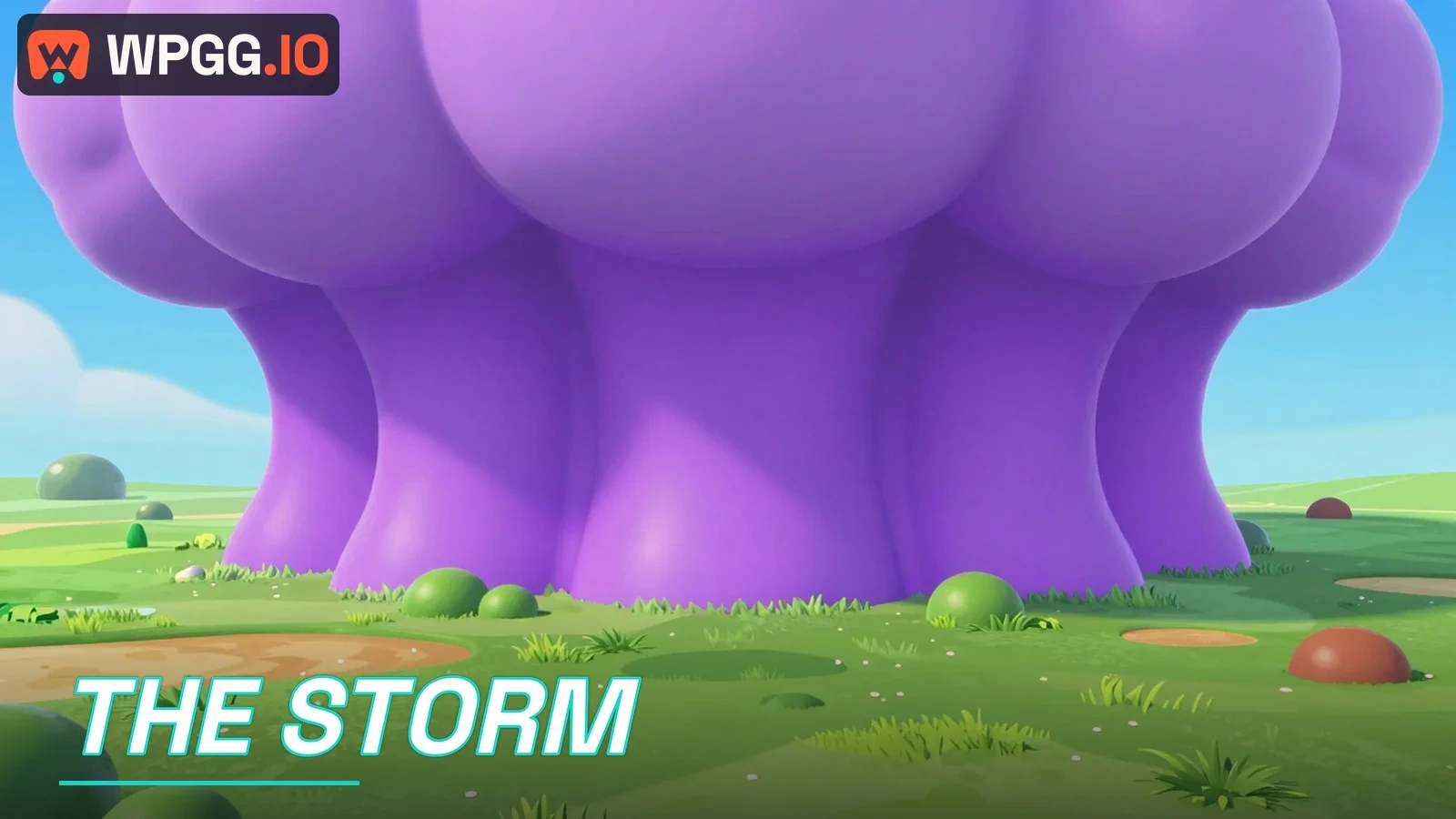
Each match’s playable area shrinks in a series of timed phases. A violet wall marks the current safe boundary; when a phase expires, the boundary contracts to a smaller circle and anyone outside it takes damage over time. The damage is small in the first phases and climbs steeply in the late ones, which is why the early game tolerates sloppy positioning and the final circles do not.
The timer is the real clock
The HUD announces every shrink with a countdown. That countdown, not the minimap, is what experienced players watch: rotations are planned from the moment the next circle is revealed, not from the moment the wall starts biting. Moving early turns a rotation into a calm walk with cover choices; moving late turns it into open-field sprinting while everyone already inside takes aim.
The wall is not a wall
Despite the visuals, the storm is not solid. Players walk through it freely and pay in ticking damage. That design produces the mode’s most dramatic plays: deep rotations through the storm with just enough healing to survive, or edge-holding positions that let the circle do the eliminating. It also produces the most common new-player loss, which is simply forgetting the timer.
Where it came from
The storm predates Battle Royale. It is the same event that Save the World builds its campaign on, and Battle Royale borrowed it wholesale in 2017. The competitive version has stayed mechanically constant ever since, through every island from the original to the current Crossbones Isle.
Planning a rotation
Three habits cover most of it. Read the map’s named locations against the revealed circle and pick a route through cover. Keep healing items for the late game rather than patching small storm ticks early. And in Zero Build, where instant walls do not exist, give rotations an extra margin. The glossary entry and survival tips in the wiki carry the same system in shorter form.
About George Tsagkarakis
George Tsagkarakis owns and runs WPGG. He has covered blockchain gaming since 2018 as an author and advisor, and has helped many projects reach players and shape their growth and community strategy. He also runs the gaming sites CryptoGames.gg and eGamers.io.
All articles by this author